Date
15 November 2016
Place
Since the Kyoto Protocol of 1992, the political wheel has been set in motion to prevent the threat from excessive Climate Change. The main attention and efforts have focused on the biggest anthropogenic source of greenhouse gas (GHG) emissions: CO2 emissions. All human activities need energy for their proper functioning and execution. The most commonly available energy sources being of fossil origin, the carbon footprint of human activities have kept growing along with the development of the global society, sometimes at a faster pace.
At the Paris Conference of the Parties (COP21) of the Climate Change Convention in December 2015, politicians agreed, in the now ratified and in force “Paris Agreement”, to set the absolute global target for the rise of the Earth temperature to 1.5°C, and to take differentiated actions at national level and at sector level. Among these sectors, transportation is a significant source of CO2 emissions and has to contribute to the global reduction efforts. Maritime transport is the lifeblood of modern society, supplying energy, food and commodities as well as catalysing global economic development and prosperity. Although shipping is the most environmentally-friendly and energy efficient mode of mass transport (on a tonne-mile basis), it also needs to contribute its share to the global CO2 emissions reduction efforts. As members of the shipping community, European Dredgers continuously work on reducing their emissions, by improving fuel efficiency of their equipment (through ship design, better performing engines, etc.) and by improving their best practices to optimise the fuel consumption during operations.
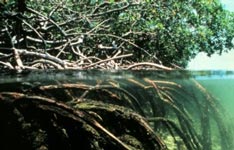
CO2 emissions reductions however cannot be fully disconnected from global economy nor from global trade. Therefore, the absolute emission targets set in Kyoto or in Paris cannot be achieved with relative measures improving performance and efficiency of vessels unless the global economy and its related demand for waterborne transport are collapsing. In order to achieve absolute targets regardless of the general state of global economy, actions on the improvement of vessels’ efficiency and performance should be complemented with actions targeting directly atmospheric CO2 concentrations. With their expertise, European Dredgers can contribute to this objective by creating new or restoring marine habitats that are natural carbon sinks, known as Blue Carbon. European industries should pursue their efforts of reducing their CO2 footprint but should also consider integrating Blue Carbon components into their strategies. European Dredgers can build multipurpose waterborne infrastructures that would contribute to these CO2 strategies to the project owner’s through increased carbon capture and long term storage of CO2.
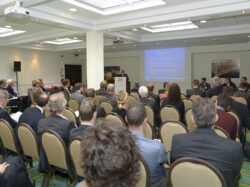
The 2016 EuDA Annual Conference opened with an overview of political initiatives to reduce CO2 emissions from ships and or dredgers at IMO, in the EU and in the Netherlands. In the last presentation of the conference, the possible solutions proposed by the European Dredgers were briefly described.
View the Conference Programme in detail and its complementary annexes.
View the Conference Attendance List
For the speakers’ presentations see below:
View the Conference Key Messages